
Robot learning was missing something. Until now.
Neural Gambit is a forearm sleeve that records muscle activity while skilled people work. Paired with cameras, it shows robots how hard to grip, not just where to move.
Movement is only half the story.
To a camera, picking up an egg and a billiard ball can look almost identical. But your muscles know the difference. Neural Gambit captures the muscle activity behind these movements, helping robots learn not just how to move, but how much force to use.
A sleeve for the people who know the job
Neural Gambit is designed to capture skills where they happen. Experienced workers wear Neural Gambit through a normal shift, creating valuable training data from the work they already know.
We capture the skill
A skilled worker wears Neural Gambit through a normal shift. Cameras record the movement, and the sleeve records the muscle signals behind it.
We teach the robot
RAI (REVEL Artificial Intelligence) learns the skill from both movement and muscle signals.
We put the robot to work
Genesis, our special-purpose humanoid, puts that skill to work on the real task.
Built for the shop floor
Neural Gambit goes where the work already happens, on the worker's arm, during a real shift.
Wear it. Get to work.
A forearm-worn sensor designed to capture muscle activity while people perform familiar tasks.
See beyond the camera.
Muscle signals can still be recorded when the worker's hands aren't clearly visible.
Capture real work.
Designed to collect data during practical tasks, not only controlled demonstrations.
A closer look at Neural Gambit.
Take a closer look at the wearable technology helping us turn human expertise into robot-learning data.
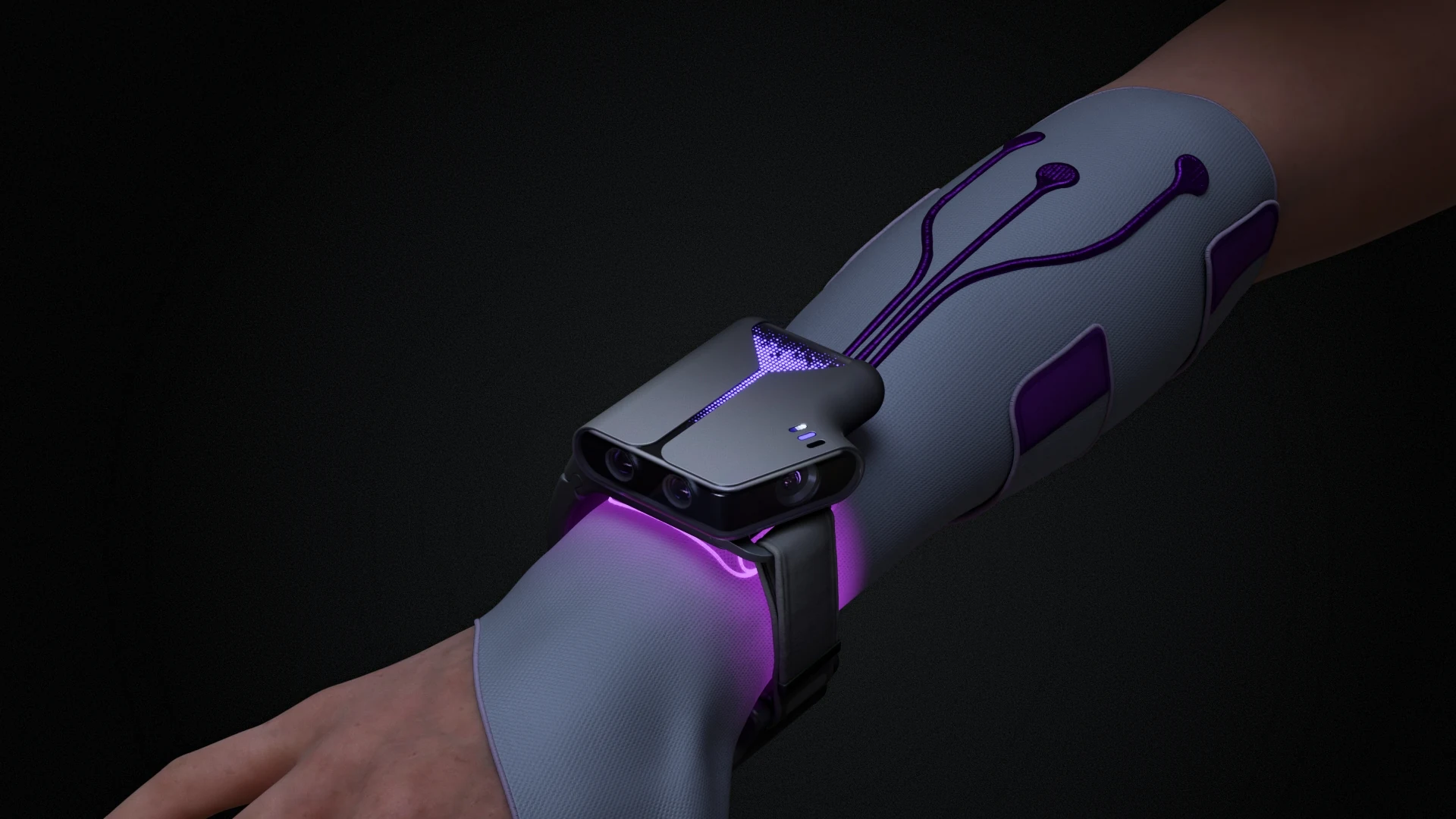
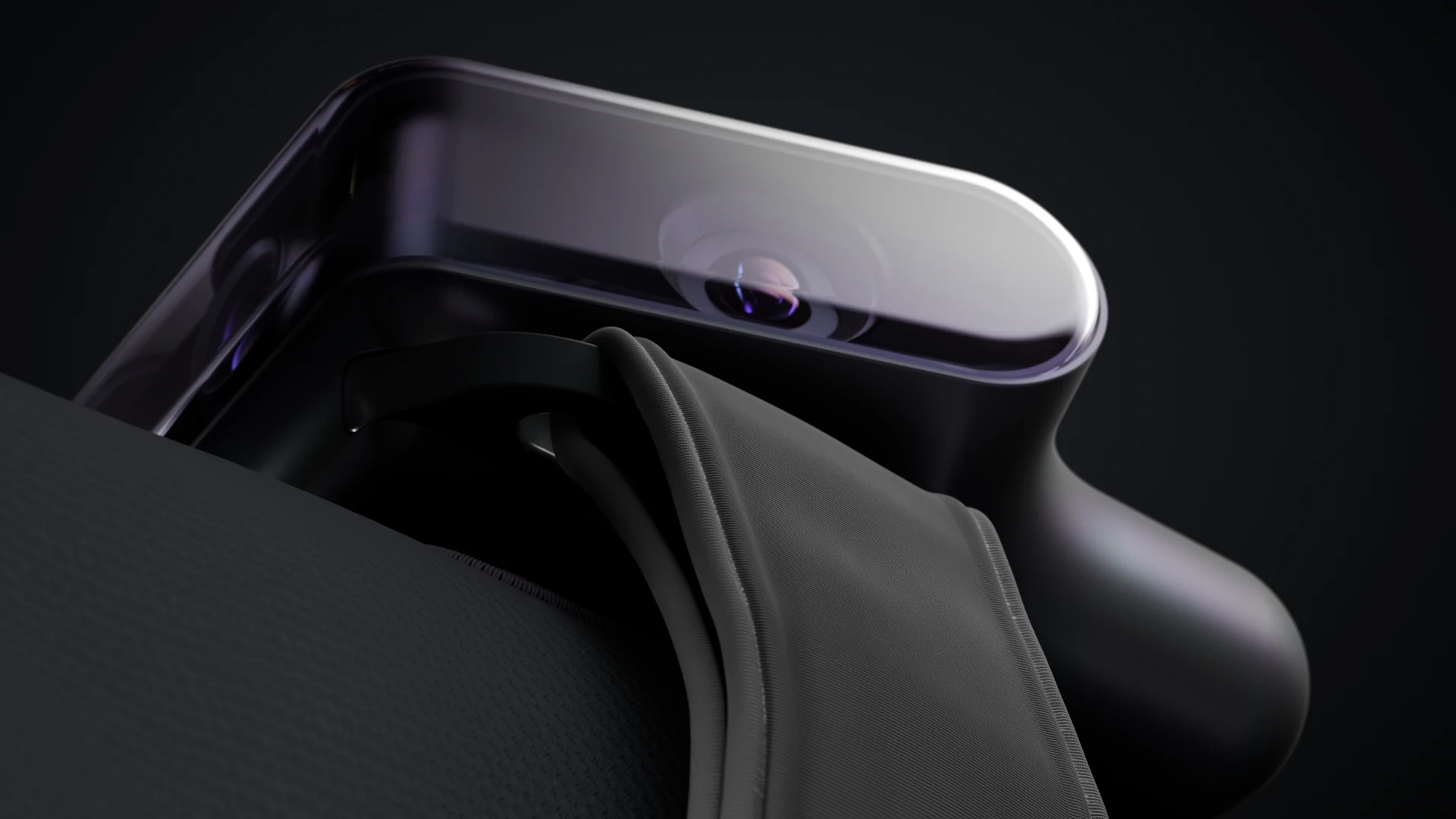
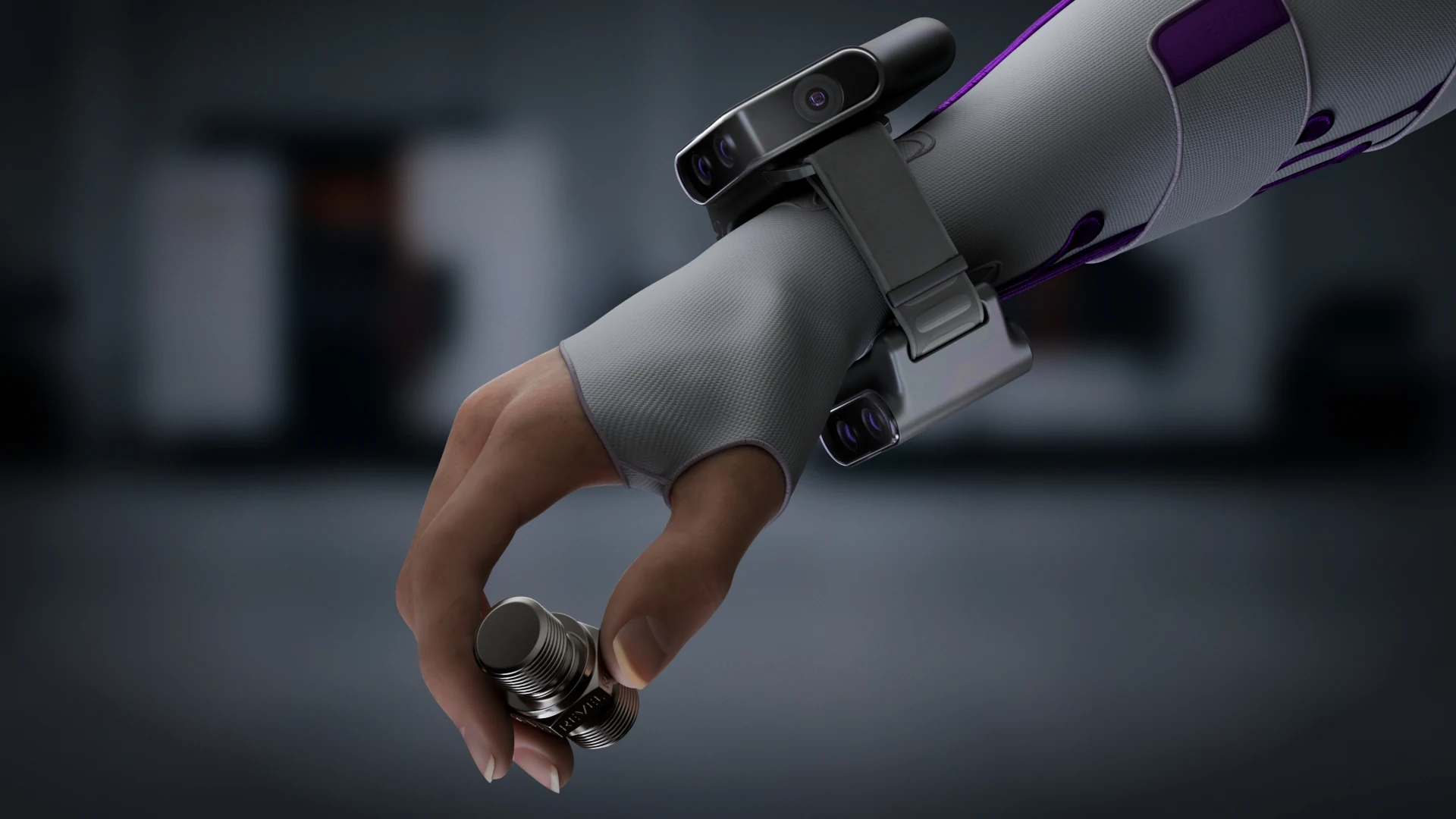
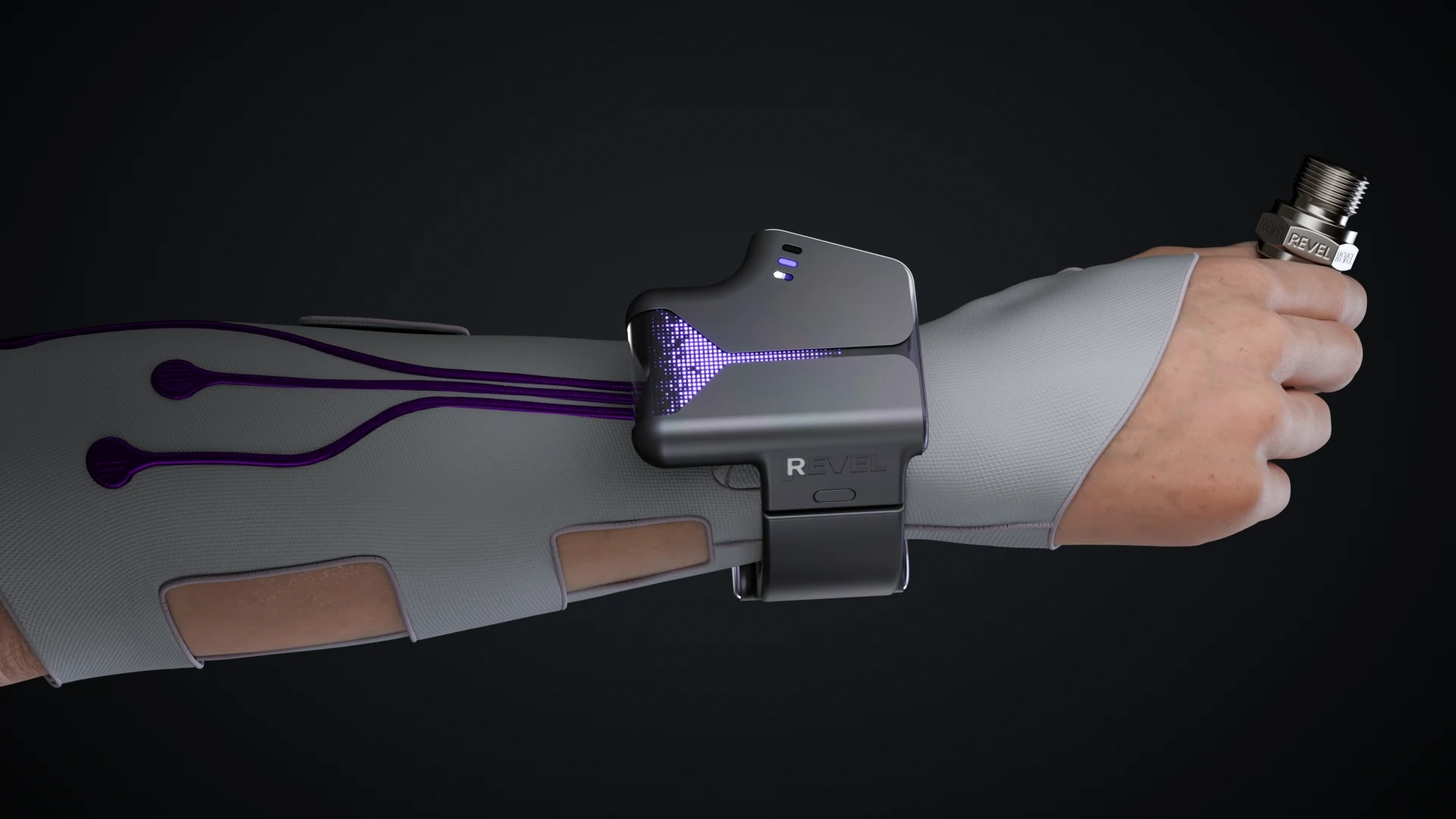
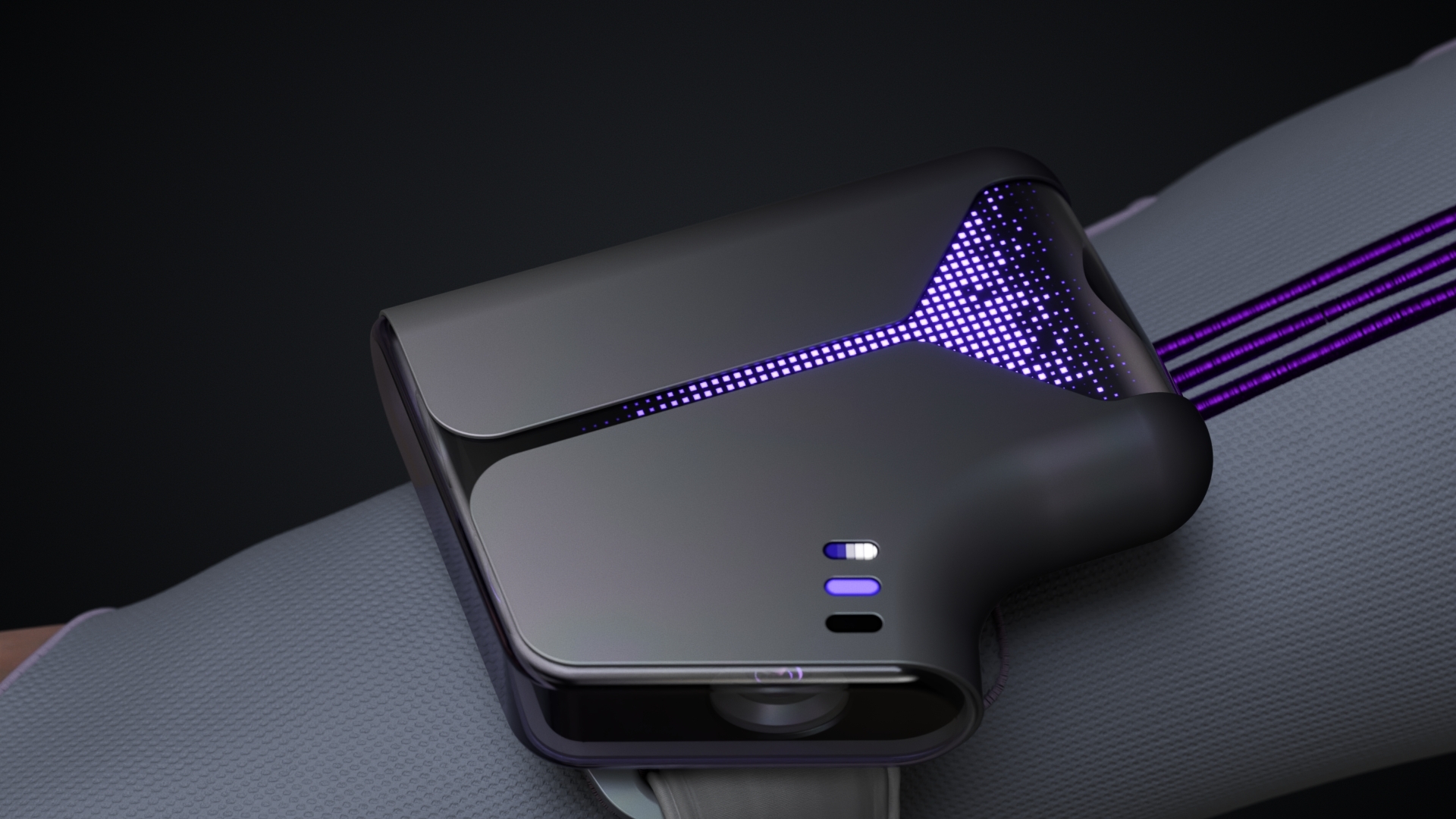
Better data = Smarter robots.
Movement alone doesn't tell the whole story. Adding force-related information can help robots learn physical tasks more effectively. Neural Gambit is built to capture the muscle signals behind that missing information.
Reads the grip a tenth of a second before the fingers move
Reads 128 points on the forearm, 2,000 times a second
Ready for a new worker in under 30 seconds
Within 3% of a worker's grip strength, on people it has never seen
Higher task success in early testing
Preliminary internal test result. Performance may vary by task and training setup.
Neural Gambit is the first step.
Capturing human expertise is the first step. But we don't stop there. Learn more about how RAI helps turn that data into robot intelligence, while Genesis is being developed to put learned skills to work in the physical world.
Frequently asked questions
Neural Gambit is a wearable sleeve that helps robots learn from skilled human workers. It uses surface electromyography (EMG) to record electrical activity in the forearm muscles while someone performs a task. That data gives our robot-learning systems additional information about the effort behind human movements.
EMG stands for electromyography, a technology that measures electrical activity produced by muscles. Why does that matter for robots? Because knowing how a hand moves doesn't always tell you how much force it's applying. EMG helps fill that gap, making it easier to learn force-sensitive skills from human demonstrations.
Cameras and motion capture are great at tracking movement, but they don't directly record muscle activity. Neural Gambit adds that missing signal, helping estimate the force and effort behind a task. It's not about replacing cameras – it's about giving robots a more complete picture of how skilled work happens.
Muscle activity can provide an early indication of the force a person is about to generate. By analyzing those signals, Neural Gambit is being developed to predict gripping force before it's fully applied. The exact timing and accuracy depend on the task, the person, and the trained model.
Yes, that's what we're designing it for. Instead of requiring people to learn a completely new way of demonstrating skills, Neural Gambit is designed to collect data as they perform familiar tasks. Some fitting, calibration, and setup are still necessary, and the capture process depends on the working environment.
First, a skilled worker demonstrates a task while Neural Gambit records muscle activity. Those signals can be combined with other data to help RAI learn important aspects of the movement and force involved. The goal is to transfer that learning to robots like Genesis, which can then be trained and tested on the physical task.
Yes, that's one of our long-term goals. When experienced workers leave, some of their practical know-how can be difficult to pass on. By capturing data from skilled demonstrations, Neural Gambit could help preserve useful information for future robot training, making valuable expertise easier to apply beyond a single person.